




Our luxury promise
-

14-day adjustment guarantee
We make sure of a perfect fit. If you need adjustments within 14 days, our experts are here to help.
-

Premium Remy hair guarantee
Only the highest quality 100% real Remy hair, ensuring natural movement and long-lasting shine.
-

Colour match guarantee
Our experts offer free colour matching so the hair blends seamlessly with your own.
-

Professional guarantee
Your hair extensions are installed by certified stylists, protecting both the look and the health of your natural hair.


Frequently asked questions about weave installation
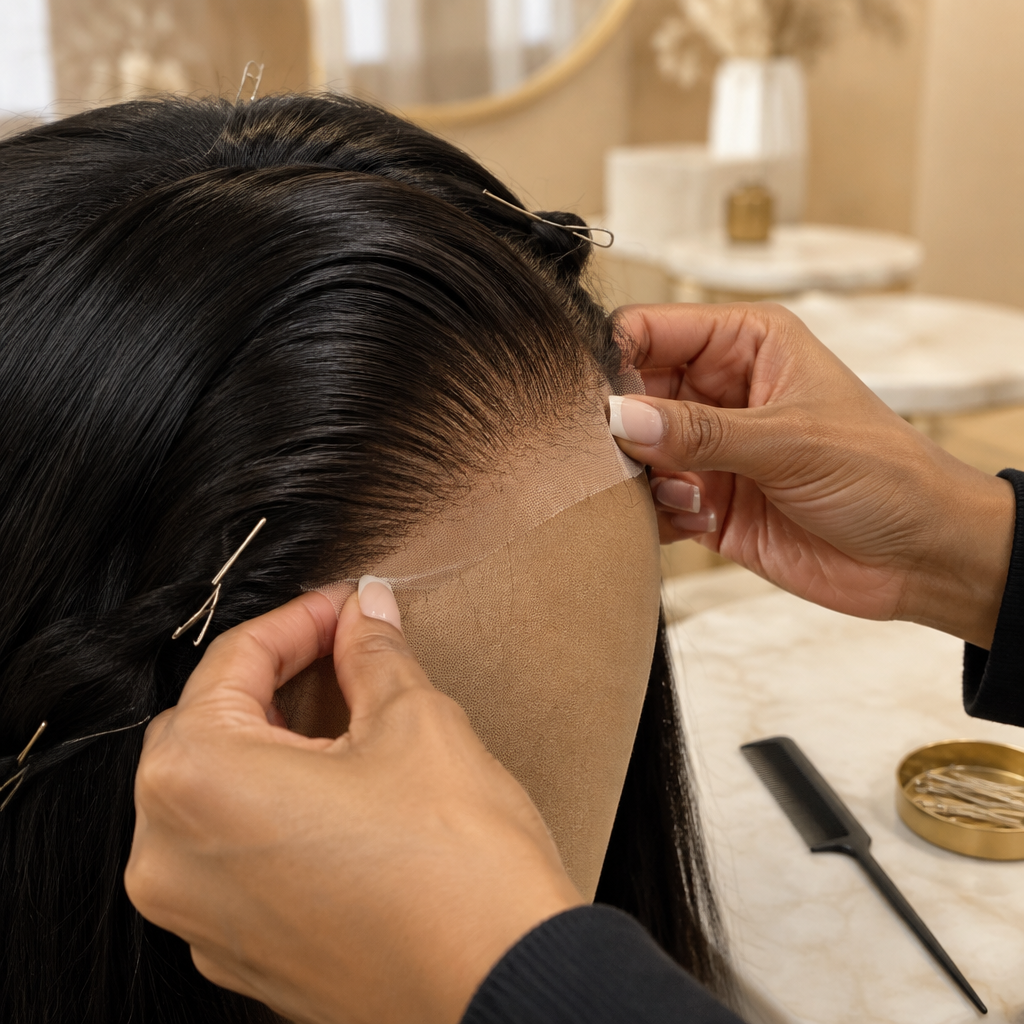
In this method, your frontal is carefully sewn along the front hairline over a base of cornrows. This creates a secure extension that hides your own roots all the way from ear to ear.
For the fitting, we use specialist threads that are extremely durable yet gentle on your skin. The right material is essential for the frontal to stay securely in place for several weeks without causing discomfort.
Once the fitting is done, you can style the human hair with a straightener or curling iron however you like. Remember to use heat protection and avoid putting the tools directly against the delicate lace.
This fitting method is very safe and is often recommended if you have thin or fragile hair around the face. Your natural hair rests untouched and protected inside the braids the whole time you wear it.
During your visit, your hairdresser helps you cut in your frontal so it falls nicely with the rest of your hair. We have a wide range and always tailor the cut to highlight your features and give exactly the volume you want.
If you buy the hair from us before the fitting, we'll make sure the mesh and hair blend perfectly with your skin tone. This colour choice is essential for creating the illusion of a real, seamless hairline.
The hand-tied human hair can be toned to some extent by a hairdresser, but strong chemicals must never touch the lace. Always check with our experts before colour treatments so neither the mesh nor the threads are weakened.
A professional fitting normally lasts about three months before it needs moving up in the salon. How long it lasts depends on how fast your own hair grows and how closely you follow our recommended care tips at home.
Unlike fitting a smaller closure, a frontal covers a much wider area across the whole forehead. This method is therefore ideal if you want to wear your hair pulled straight back without the edges of the extension showing.
Always put your hair up in a loose braid before bed to prevent unnecessary wear on your sewn-in attachments. We also strongly recommend sleeping in a satin bonnet to protect the mesh and threads from friction against the pillow.