
Double Drawn Weft
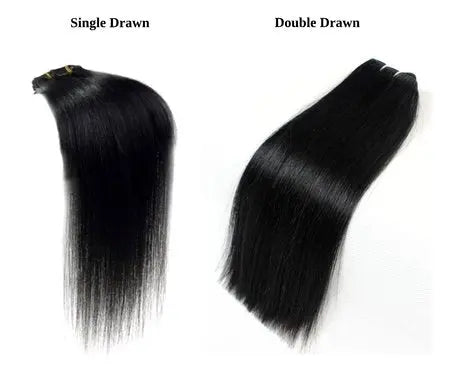
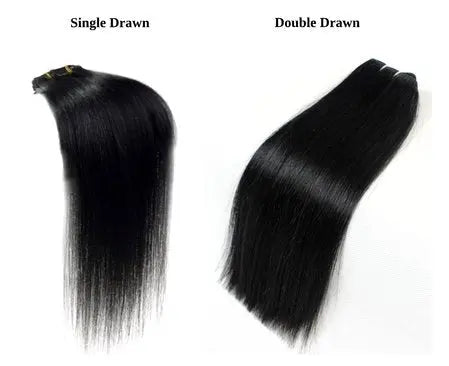
Double drawn means the shortest hairs have been sorted out, so the hair weft is equally thick all the way down to the ends. The difference is most visible on longer hair.
Available in straight, wavy and curly textures in genuine Remy hair. See our full range of hair weft.
-
Luxury Double Drawn Hair Weft – Wavy
Regular price From €182,52 EURRegular price -
Luxury Double Drawn Hair Weft – Straight
Regular price From €182,52 EURRegular price


The method in brief
Double drawn means the shortest strands have been sorted out. The weft stays equally thick all the way to the ends.
Not sure what suits you?
We help you choose in a free online consultation.

Frequently asked questions
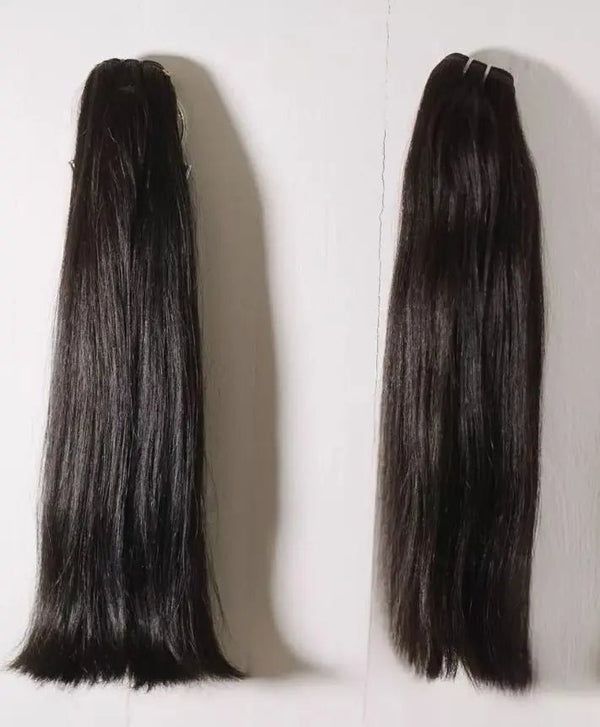
That the shortest strands have been sorted out by hand, so almost all the strands are the same length. This makes the hair weft equally thick all the way down to the ends.
Single drawn has strands of different lengths and tapers towards the ends, just like growing hair. Double drawn is equally thick all the way down.
Mostly on long lengths. On shorter hair it's barely noticeable, because a regular hair weft doesn't have time to thin out much.
Often less. Because the hair weft is equally thick all the way down, fewer rows are needed for full coverage, which also means less weight at the scalp.
If you want a soft, naturally tapered fall. A regular hair weft gives a closer result then, because it thins out like your own hair.
Yes, especially well. A bob or a blunt-cut hemline needs density in the ends, and that's exactly what double drawn gives.
Just like our other hair wefts – sewn in onto a braid (sew-in) or attached with micro rings. Double drawn describes the hair, not the attachment method.
Straight, wavy and curly. There's also a version that is both double drawn and invisible weft, with an ultra-thin top.
Yes, it's human Remy hair. Have it coloured darker at a hairdresser and use heat protection when styling. We advise against bleaching.
The same as for other hair wefts: every two to three months, whether the hair weft is sewn in or sits on micro rings.